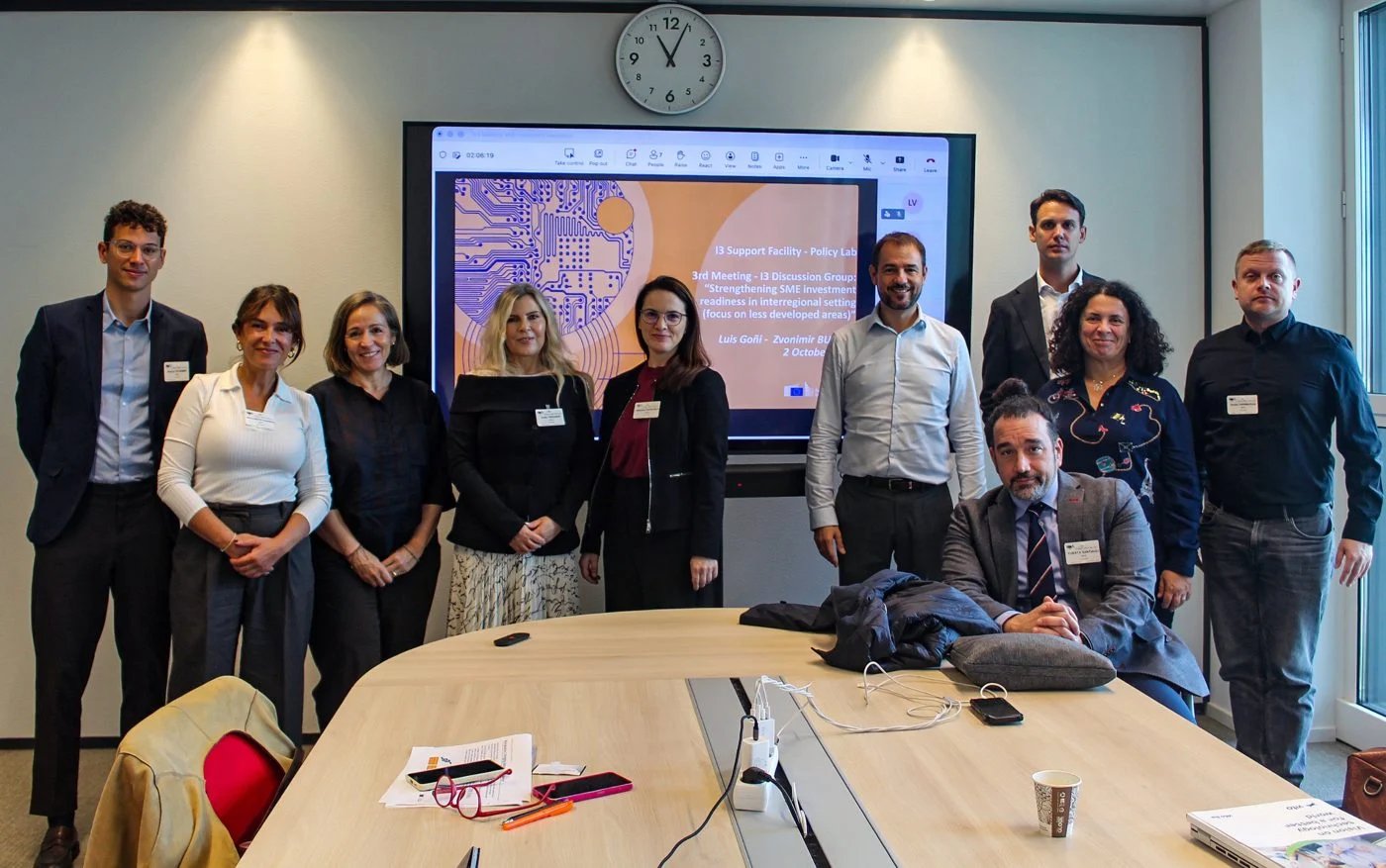
The final meeting of the I3 Support Facility discussion group on SME investment readiness took place in Brussels on 2 October 2026. Anita Tregner, Founder of VECTORA Europe, acted as rapporteur and presented the group's conclusions. The work focused particularly on less developed regions and the question that follows many innovation projects: how does a promising collaboration become an investment that a business can actually deliver?
The meeting provides a useful starting point for a wider practical discussion. The following perspective sets out how we approach investment readiness when advising companies, regional organisations and interregional partnerships.
Investment readiness begins with the business
An SME can have an excellent technology and still struggle to explain the investment it needs. A project description usually explains activities, partners and outputs. An investment case must also explain who will buy the result, why the business can deliver it, what resources are missing and how the next stage will be financed. Those questions deserve attention before a funding application is written.
Start by identifying a specific business decision. Is the company preparing a demonstration line, entering a new market, adapting a product or expanding production capacity? Define the proposed investment around that decision. This makes it easier to distinguish essential expenditure from attractive additions and to judge whether an interregional project is the right vehicle.
Connect technical progress with market evidence
The discussion group's published scope connects the transition to follow-on finance with better project design and implementation. That connection matters because a successful technical demonstration does not, by itself, resolve a company's commercial uncertainties.
A useful project plan identifies which evidence will reduce those uncertainties. This could include a customer's assessment of a prototype, a documented production-cost assumption, a validation exercise with an end user or a route through the relevant certification process. Each activity should answer a business question. A long list of demonstrations is less useful than a smaller set of tests that changes an investment decision.
Make each region's contribution visible
An interregional partnership should explain more than where its members are located. It should show how their capabilities depend on one another. A manufacturer may need testing facilities in another region, a specialist supplier elsewhere and access to an application environment that its home market cannot provide. The investment case becomes stronger when those relationships are specific and necessary.
For regions with fewer established international connections, the first task may be to make local capabilities visible. Prepare concise profiles of companies, facilities and expertise, then match them to a concrete value-chain gap. This approach gives a regional partner a substantive role from the beginning and helps avoid participation that is limited to meetings or dissemination.
Plan for the finance that follows the grant
A grant can support an important development stage while leaving later investment needs unresolved. Equipment purchases, working capital, sales development and the expansion of a team may follow different schedules. A financing roadmap should therefore distinguish the funded project from the wider business plan, including expenditure that falls outside the grant.
Build that roadmap around milestones rather than a single funding announcement. Identify what evidence a lender, investor, industrial partner or future funding programme would need at each stage. Record the assumptions behind expected revenues and costs, and assign responsibility for testing them. This is preparation for informed conversations; it is not a promise that any particular source of finance will be available.
The investment case should explain what happens after the project, while there is still time to prepare for it.
Give less developed regions a practical role
Participation becomes more meaningful when partners can influence the investment agenda and retain useful capacity. That requires attention to the resources needed to take part: technical staff time, language support, access to specialist advice and the ability to contribute to decisions. These needs should be addressed as part of project design rather than treated as an administrative afterthought.
Regional intermediaries can help by bringing together companies, research organisations and public bodies around a small number of credible opportunities. The objective is to identify investments that make commercial sense locally and benefit from cooperation elsewhere. Success should be assessed through the capability and relationships that remain, alongside the activities delivered during the grant.
Translate the discussion into a working checklist
For an applicant, the most useful output is a short set of questions that the partnership can answer together. Keep the answers in a shared working document, update them as evidence develops and be explicit about what is still uncertain.
- Which customer problem or industrial need makes the investment necessary?
- What evidence is already available, and which assumptions must the project test?
- Why are the selected regions and partners needed to deliver the result?
- Who will own, operate and maintain the assets or services after the project?
- What expenditure follows project completion, and who is responsible for preparing its financing?
This exercise also reveals whether a consortium is ready to apply or needs further preparation. A clear decision to develop the concept further can be more valuable than rushing into a call with unresolved commercial responsibilities.
Turn a policy conversation into delivery
The value of a discussion group extends beyond the meeting itself. Its themes become useful when they shape how partnerships allocate tasks, collect evidence and prepare their next decisions. Our contribution as rapporteur sits alongside that practical commitment: connecting regional innovation policy with the needs of the companies expected to invest.
For organisations preparing an I3 initiative, a sensible next step is to review one investment case in detail before expanding the whole consortium. VECTORA Europe can help connect that review with partnership design, EU funding strategy and implementation planning. Contact us about your project to discuss the stage you have reached and the decisions ahead.
Sources and further reading
SME investment readiness · I3 Support Facility